What to Do When the News Feels Heavy
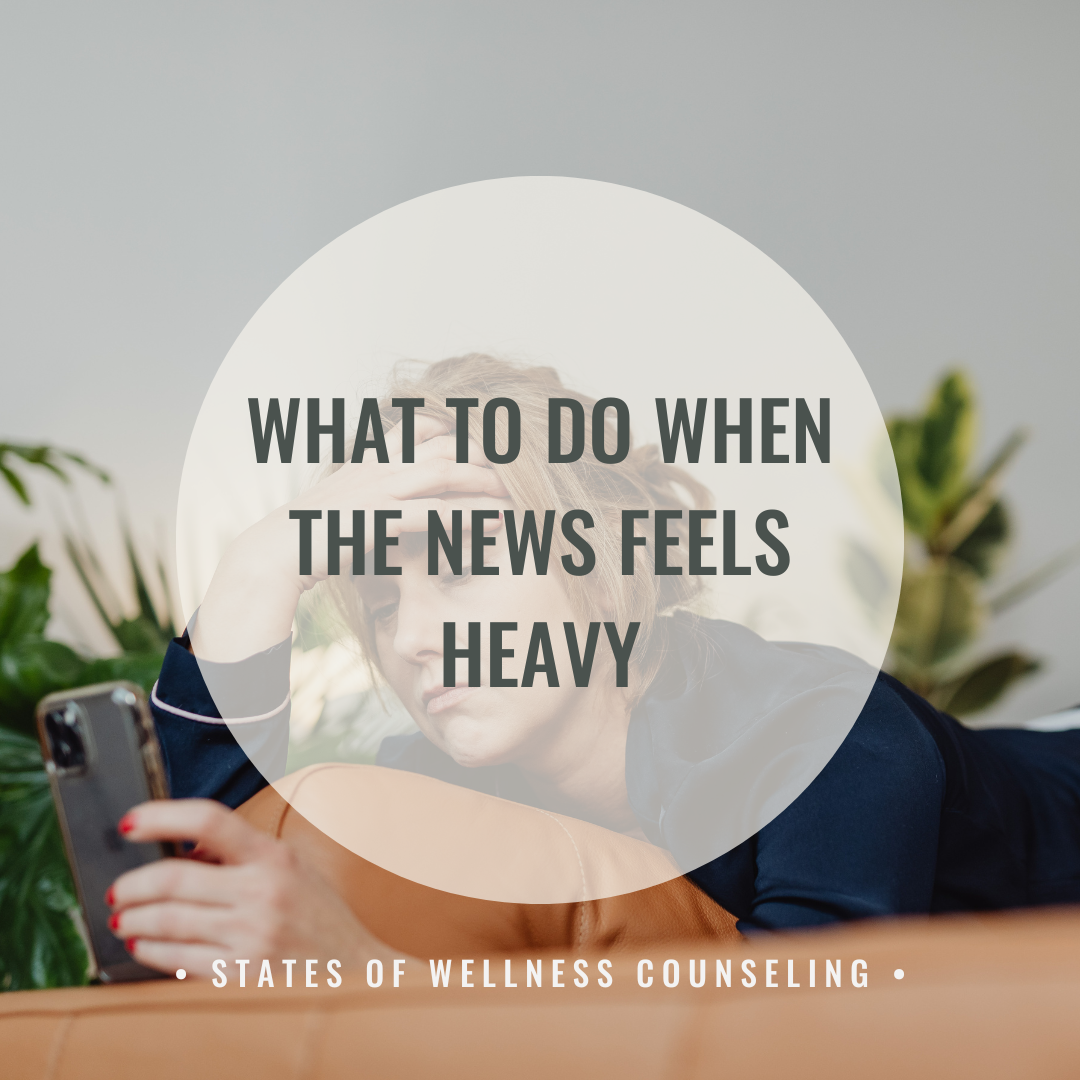
How can you function “normally” when the world feels like it’s on fire? Learn how to manage guilt, set news boundaries, and cope when the news is overwhelming.
I’m feeling it myself, and I’m hearing from multiple clients that they are struggling with what is going on in our world right now. When we boil it down, the two most common thoughts they share with me are:
Feeling guilty for living "normal" life when horrific things are happening in the world.
Struggling to find the balance between staying informed and not consuming themselves with the news.
So what can you do when the world is on fire?
Getting involved and speaking up for issues that are important to you matters and can help channel that energy and make a difference in the world. For the purposes of this blog, we are focusing on coping with the emotional weight of the news and finding balance for your nervous system.
Feeling guilty for living a normal life when people are suffering
We’re reading, hearing, and watching horrific things happening in our world and then need to attend a work meeting, read a book to our kids, go grocery shopping, clean the bathroom, or go to that concert we’ve had tickets for.
Many people are noticing this feeling of guilt. It’s a disconnect between what we know is happening outside our immediate lives and the need to still function, for lack of a better word, “normally.”
Here’s a truth that you can use as a reframe for when this disconnect feeling hits and leaves you feeling guilty: going about your “normal” life is how you regulate your nervous system. Our minds and bodies need routine, rhythm, the mundanity of daily life, and even moments of joy to stay regulated.
These “normal” activities are not things you are doing because you don’t care about what’s happening. They are things you must do in order to survive this timeframe, in order to continue caring about what’s happening in our world, and in order to show up for what matters.
Try this: Remind yourself, choosing to be present in this moment is regulation, not disengagement. When guilt shows up, name one “normal” thing you’re doing as nervous-system care (e.g., “Reading to my kid is regulation, not avoidance.”)
How to stay informed without feeling overwhelmed
So how do we be informed citizens without completely causing ourselves to lay in a fetal position all day? We give our nervous system chances to settle.
Being informed vs. being consumed
Staying informed matters. Consuming yourself does not.
I’m sure you’ve heard it a million times before, but I’ll say it again because it does matter: our brains were never designed for the 24/7 news cycle. We are not meant to be in the know with everything that is happening everywhere all the time.
Try this: A helpful reframe: being informed is intentional; being consumed is passive.
Ok, so what do you do instead?
Set practical news boundaries
Boundaries with the news do not equal indifference. I promise you. You have to set boundaries with your news consumption. There’s no way around it. It is not 100% foolproof, but it does make a significant difference in your ability to be present for your daily life and settle your nervous system.
Try this: Small, realistic changes can make a meaningful difference:
Nothing says ‘good morning’ like laying in bed checking the news and feeling defeated before your feet even hit the floor. Avoid news consumption first thing in the morning or right before bed, when your nervous system is most vulnerable. Pick another time of day to check in.
Turn off push notifications from news apps so headlines aren’t constantly interrupting your day.
Get physical space from your phone and other devices. See my blog about how to stop phone addiction for tips on this.
Edit your social media use. This one is major so I’m adding its own section here.
Social media counts as news consumption
For a lot of people, social media is where they access the most news. It’s also a pretty dysregulating option because it does not lead with intention. One minute you’re watching a funny voiceover of raccoons in a dumpster (it’s worth looking up) and the next you’re faced with the horror of the world.
You didn’t choose news at that moment. That’s the issue. Social media takes away intentionality.
Try this: Edit your social media use. You’re not committing to never reading the news, you’re just choosing that social media isn’t the place for it.
Teach the algorithm that you don’t want news items popping up in your feed. Go through the effort to use “Not Interested” or “Hide” features when news videos or posts appear unexpectedly in your feed. If there’s a day where you do engage in news content on social media, you may need to repeat this step, and that’s ok.
Unfollow or mute accounts that consistently spike your anxiety.
DO NOT READ COMMENTS. This is an easy commitment to make. Don’t read social media comments on posts about what’s going on in the world. It doesn't help, doesn’t make you feel hopeful, and we now know that many of these comments are not even real people or accounts. Just skip it altogether.
How to cope when feeling overwhelmed by the news
Ok, so you engaged with the news and now you want to curl up into a tiny ball forever. Even after intentional news consumption, it’s important to build in a regulation step.
Try this: You take in information, then help your body come back to baseline.
Return to those “normal” activities we talked about earlier. They aren’t guilt ridden, they are helping you regulate and survive.
Physically move your body. After you put your phone down, get up. Stretch, change rooms, do a small chore, or anything to move from where you were physically (and mentally).
Take a few slow breaths.
Step outside even for 2 minutes. Find a bird and watch it. Close your eyes and feel the temperature of the air. Go grab your mail. Literally touch grass.
Make yourself some tea. Or drink a glass of water.
Eat a fruit or vegetable.
Hug someone you love: a partner, child, pet, friend.
You aren’t trying to erase what the news made you feel. You’re taking it with you as you move through your day. You’re just doing so in a regulated way.
Want support like this in your inbox?
If this blog resonated with you, you’re not alone. In my newsletter, I share practical tools for managing stress, coping with heavy news, and navigating everyday life without the pressure to do everything perfectly. You’ll also get tips for regulating your nervous system, setting boundaries, and staying present even when the world feels overwhelming.
You can join my newsletter here.
About the author:
Hi, I’m Shannon. I am a psychotherapist who works with Millennial and Gen Z women navigating anxiety, overwhelm, and life transitions. I know firsthand how stress can quietly build until everyday life feels heavy and exhausting.
I believe managing stress is often less about fixing everything and more about making small, practical changes that improve your day-to-day experience. In my therapy work, I help clients slow down, regulate their nervous systems, and create systems that support mental health in real life.
If you are in Illinois or Wisconsin, connect with me to see if we may be a good fit to meet your needs and goals. You can also check out my full website to learn more.

